October 2026 • 11 min read
Santa Maria is the oldest, sunniest and most southerly of the nine Azores: 97 km², about 5,400 people, one town, and a landscape unlike the rest of the archipelago, with pale-sand beaches, a red clay desert, marine fossils in the cliffs and vineyard terraces stepping down to turquoise bays. It is a 25-minute flight from São Miguel and most visitors give it two or three days. The places not to miss are the bay of São Lourenço, Praia Formosa, the Barreiro da Faneca, the Anjos pools and chapel, the summit of Pico Alto and the Maia coast with its waterfall and lighthouse.
Below: why the island is different, the 15 places to visit organised by area, how long to stay and how to get there, with links to our detailed Santa Maria guides on hiking, beaches, food, hotels, tours and a three-day itinerary.
Why Santa Maria Is Different From the Other Azores
Santa Maria was the first island of the Azores to be settled, around 1432 under Gonçalo Velho Cabral, and it is also the first to have formed: the oldest rocks date back more than 8 million years, and because the island has had no volcanic activity for millions of years it has eroded into gentler shapes than its neighbours. More importantly for a visitor, it is the only Azorean island with sedimentary rock and marine fossils, laid down when sea levels were higher 2.7 to 5 million years ago, and that geology gives it pale sand where the other islands have black, limestone quarries, and the red clay plateau of the Barreiro da Faneca.
It is also the island with the most sun and the least rain, with around 2,000 to 2,200 hours of sunshine a year, which earned it the name Ilha do Sol, the Sun Island. The climate, the beaches and the clear water around the Ambrósio seamount make it the beach and diving island of the archipelago. The island is small, roughly 17 km by 9.5 km, with a single municipality, Vila do Porto, and five parishes, so everything on this page is within 25 minutes' drive of everything else. It is quiet: about 5,400 residents, no resorts, a handful of hotels and guesthouses, and village festivals that are for the villages rather than for visitors.
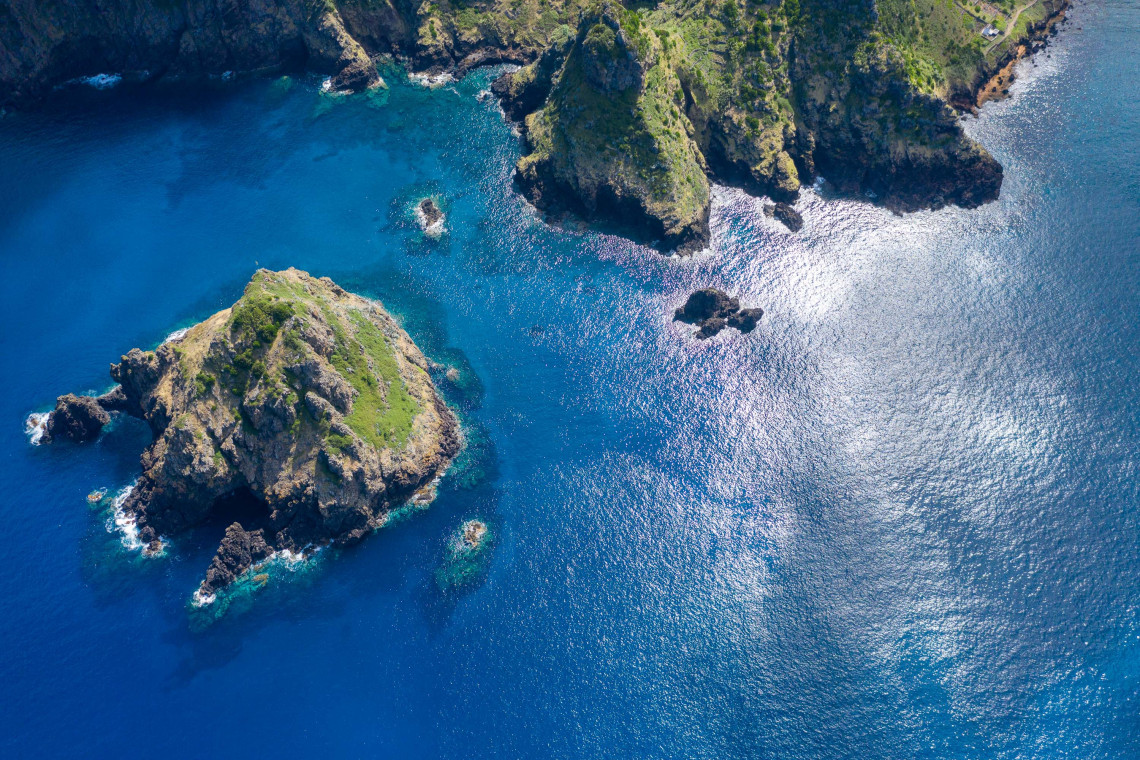
Two more facts shape the island. Christopher Columbus stopped here in February 1493 on his way back from the Americas and his crew gave thanks in the chapel at Anjos, which is why the island claims a share of the story. And the airport, built as an American base in 1944, became one of the great transatlantic staging posts of the propeller age, which explains the oversized runway, the aviation heritage in Vila do Porto and the Santa Maria oceanic air traffic control centre that still guides flights across the North Atlantic.
The 15 Places to Visit, by Area
Vila do Porto and the South-West
1. Vila do Porto. The only town, founded in the 1430s and the oldest settlement in the Azores, sits on a ridge above the harbour five minutes from the airport. Walk the main street of whitewashed houses with their painted trims and the island's distinctive tall chimneys, step into the Igreja Matriz de Nossa Senhora da Assunção, which dates from the 15th century and was rebuilt after pirate raids, and the Convent of São Francisco, now the town hall. The marina below is where the dive boats and whale-watching trips leave from. Most of the island's restaurants are here.
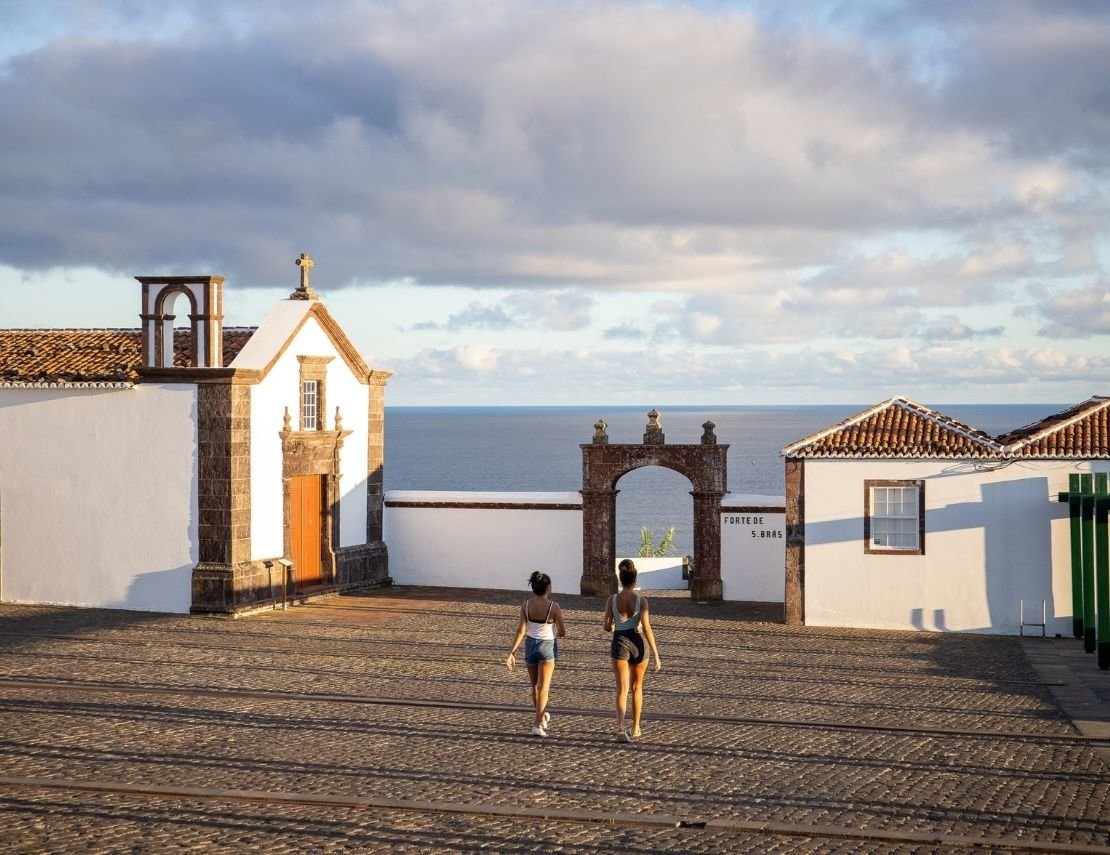
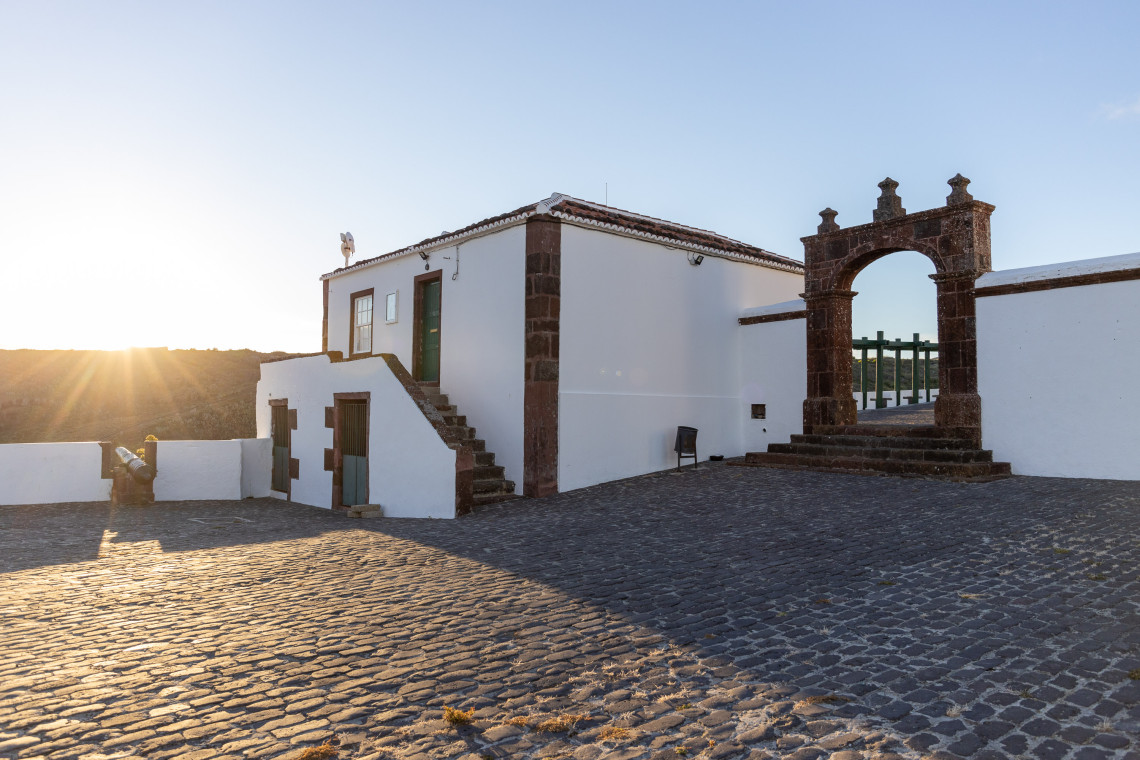
2. Forte de São Brás. A 17th-century fort on the Alto da Rocha at the seaward end of town, built to defend the anchorage against the pirates and corsairs who raided the Azores for two centuries, restored in the 1960s, with nine old cannon still in place and a wide view over the bay and the commercial port. It is also the start of the Costa Sul hiking trail and a good spot for sunset.
3. Centro de Interpretação Ambiental Dalberto Pombo. The island's small natural history centre in Vila do Porto, named after the self-taught naturalist who catalogued Santa Maria's fossils and insects, and the place to understand the island's geology before you see it in the cliffs. It houses the Casa dos Fósseis collection; check opening hours locally.
4. Pedreira do Campo and Figueiral. On the road east from town towards Praia Formosa, the Pedreira do Campo is a regional natural monument where a quarry face exposes marine fossils embedded in volcanic rock 20 m above today's sea level, evidence of the island's ancient shorelines. Nearby at Figueiral an artificial cave shows where islanders dug clay for roof tiles and limestone for lime. Both are quick stops on the Costa Sul trail or from the road.
The South Coast: Praia Formosa and Almagreira
5. Miradouro da Macela. The viewpoint above Praia Formosa on the descent from the main road, with the whole bay, the beach and the Almagreira coast below. The best photograph of the island's pale sand.
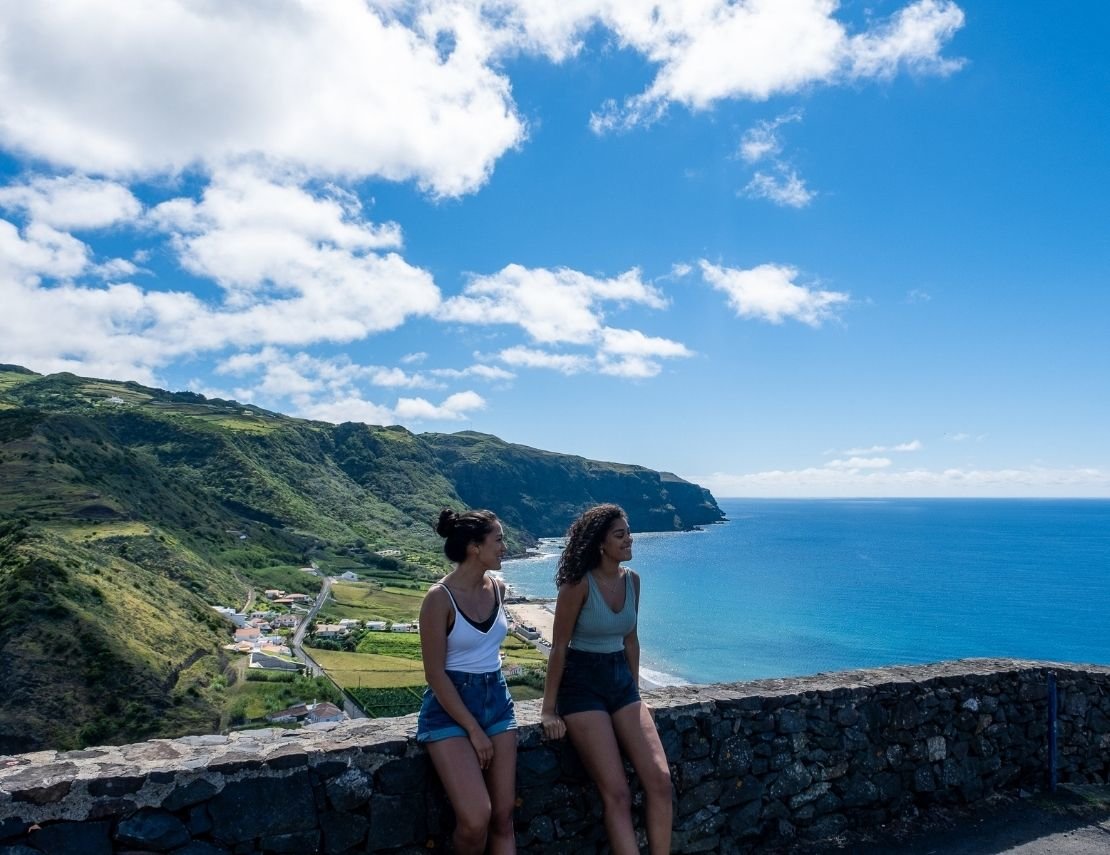
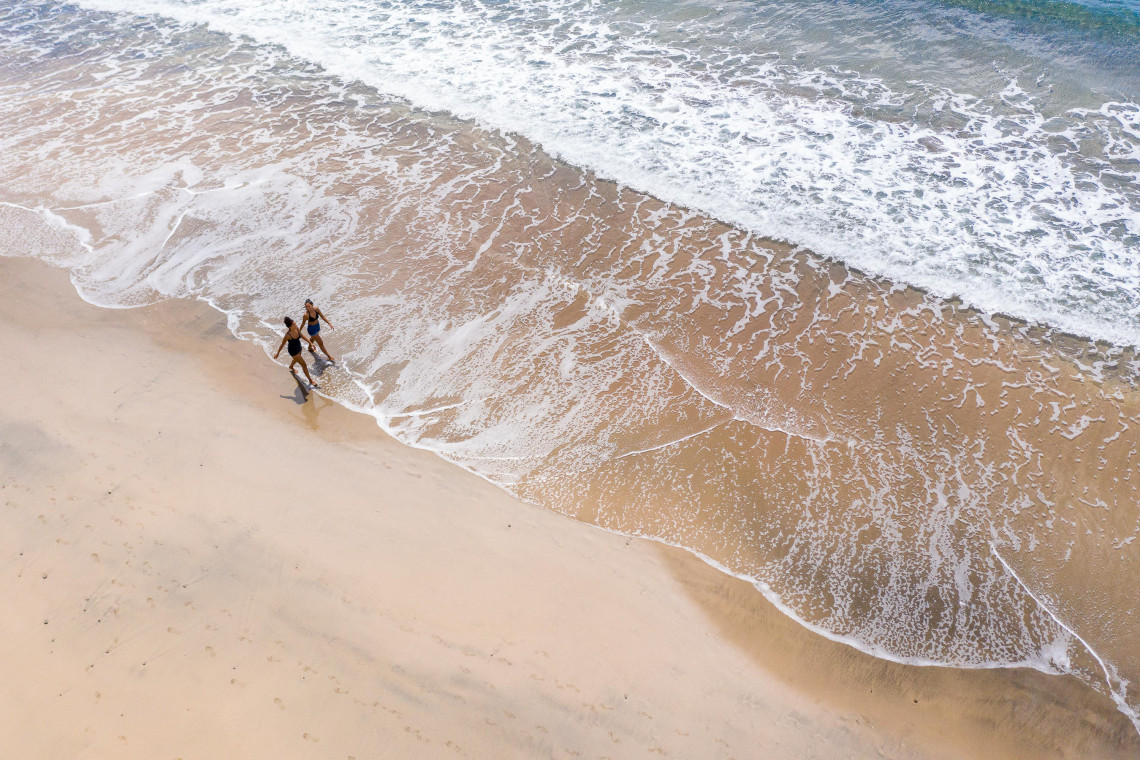
6. Praia Formosa. The best-known beach in the Azores for the simple reason that its sand is light rather than black, thanks to limestone and shell fragments mixed into the volcanic grains. About a kilometre long, Blue Flag, with lifeguards in summer, bars, showers and a campsite, and the venue of the Maré de Agosto music festival every August since 1984. It appears on a 1584 map of the Azores as Playa Hermosa, which makes it the oldest named bathing spot in the islands. Our Santa Maria beaches guide has the full detail on this and the natural pools.
The East: Santo Espírito, Maia and the Lighthouse
7. Santo Espírito. The most traditional parish on the island, a 20-minute drive from town, with a baroque parish church, the Museu de Santa Maria in an old house showing the island's ceramics, weaving and farm life, and the Cooperativa de Artesanato where women still weave on hand looms. The hamlets around it are the best place to see the island's classic houses: whitewashed walls, trims painted blue, green, ochre or red, and cylindrical chimneys.
8. Cascata do Aveiro. A waterfall of about 110 m, among the highest in Portugal according to the Azores Geopark, that drops down a cliff of basalt to the sea at Maia. Fullest from autumn to spring; a trickle by late summer. Seen from the road down to Maia and from the Santo Espírito to Maia trail.
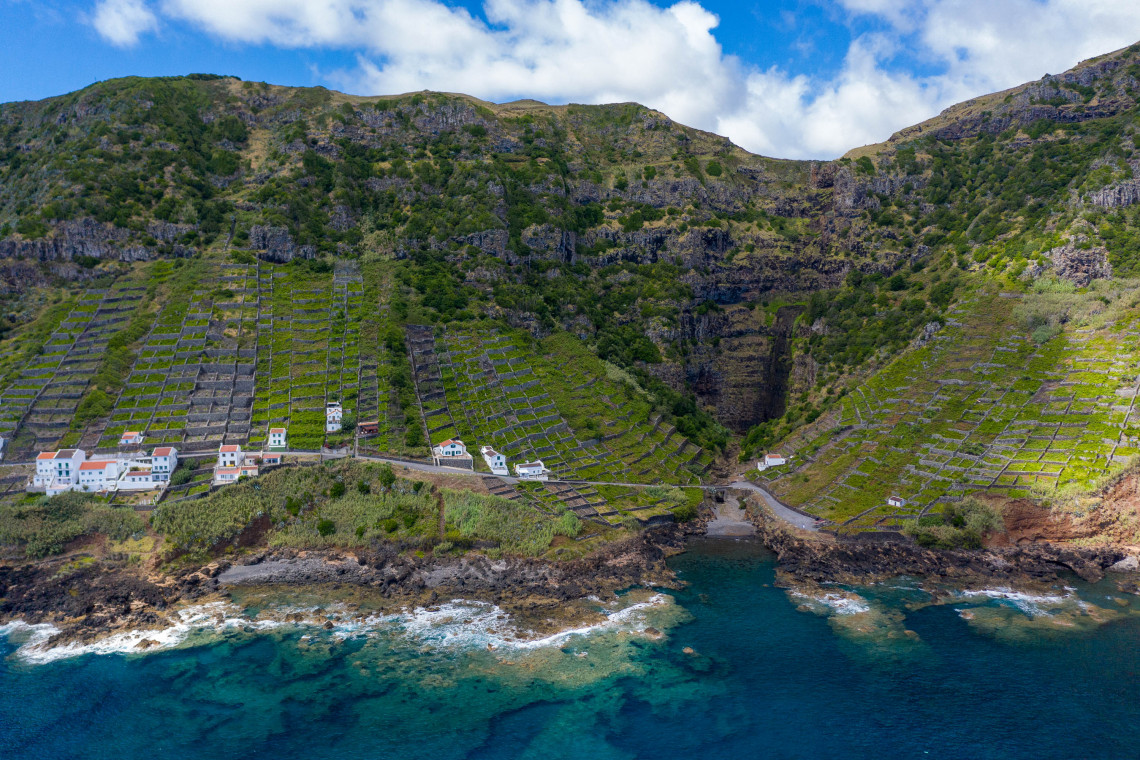
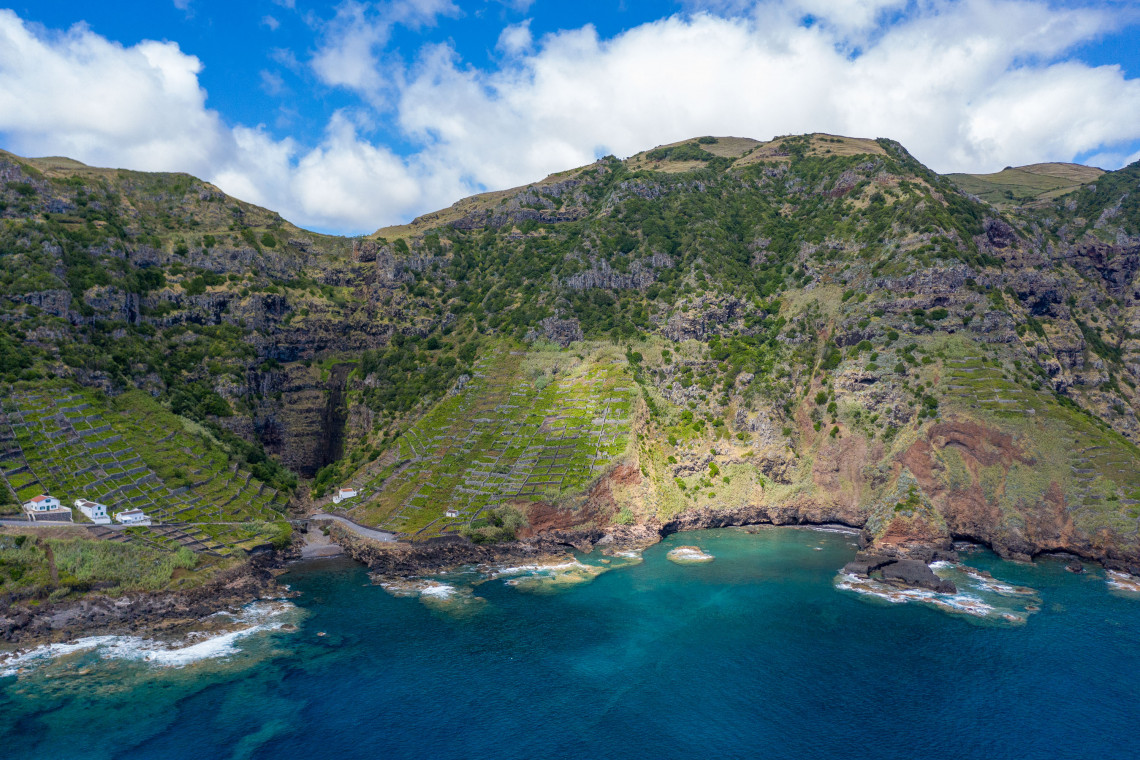
9. Maia and its vineyards. A hamlet of dry-stone vineyard terraces climbing the cliff from a natural saltwater pool, with a small bathing complex, a bar in summer and some of the clearest water on the island. The terraces, like those at São Lourenço, are hundreds of years old and still produce the local wine.
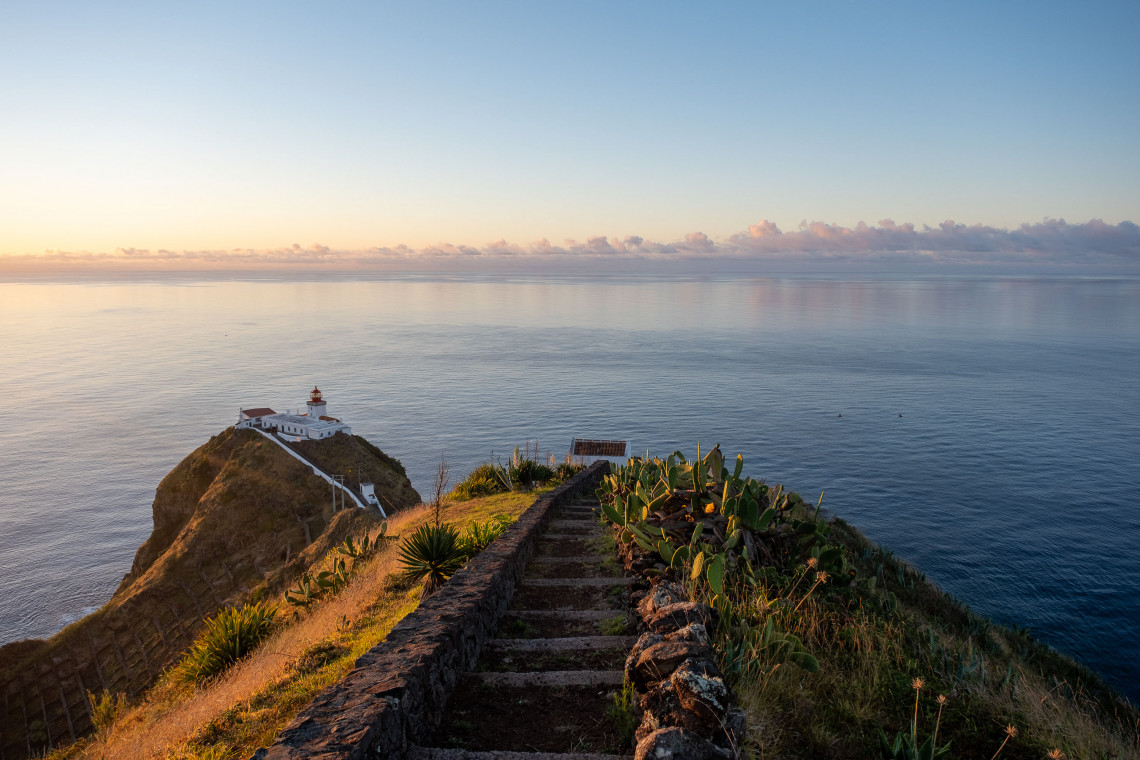
10. Farol de Gonçalo Velho and the Ponta do Castelo whaling station. The lighthouse on the island's south-eastern tip, a 14 m stone tower inaugurated in 1927, stands above the ruins of the old whaling factory at Ponta do Castelo, where sperm whales were processed until Azorean whaling ended in the 1980s. The headland is the end of the guided Santo Espírito to Maia walk and one of the island's wildest spots, with the Formigas islets visible on clear days.
The Interior: Pico Alto
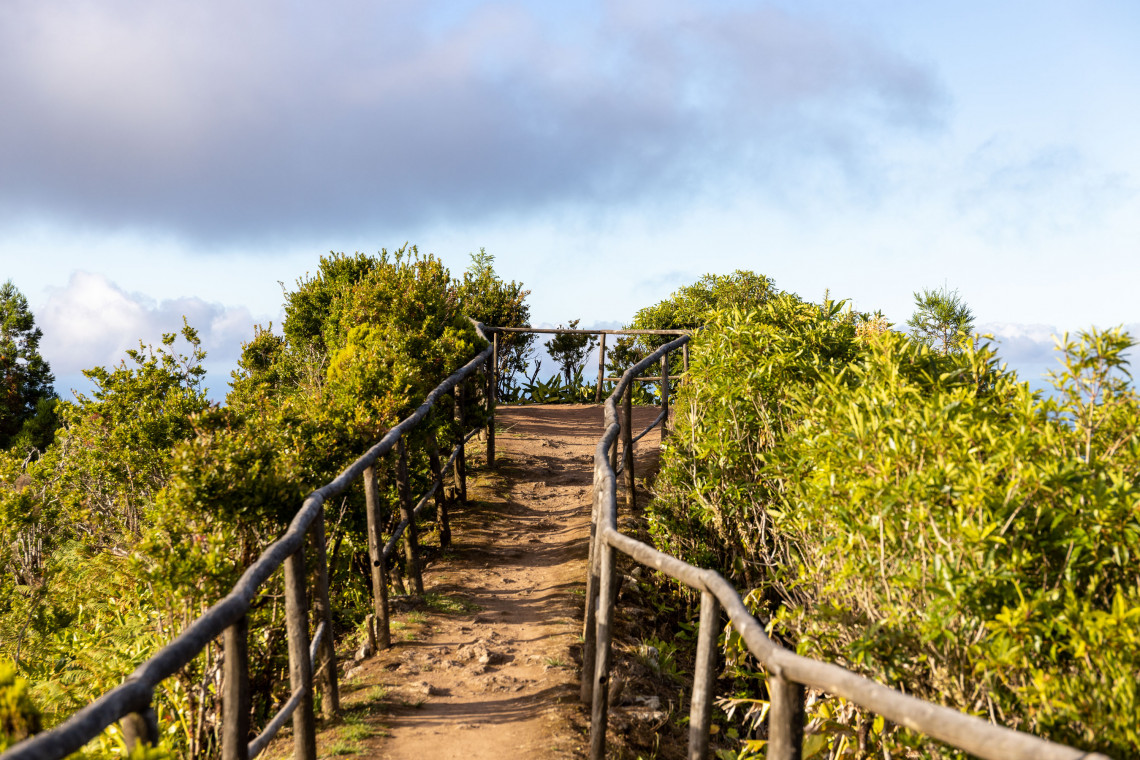
11. Pico Alto. The highest point on Santa Maria at 587 m, reached by a short road and a flight of steps beside a military building, with a view over the whole island and, on clear days, to São Miguel. The circular trail (PRC02 SMA, 6.2 km) loops through the cedar and laurel forest on its flanks and passes the memorial to the 1989 air crash. The summit is often in cloud by midday; go early.
The North: Anjos and the Red Desert
12. Anjos. A fishing hamlet on the north coast with the island's best natural pool complex and the Ermida de Nossa Senhora dos Anjos, a chapel first built in 1439 and rebuilt between 1460 and 1474, where Columbus's crew heard Mass in 1493. His statue stands beside it. Anjos is also the island's premier surf break, a right-hand point for experienced surfers.
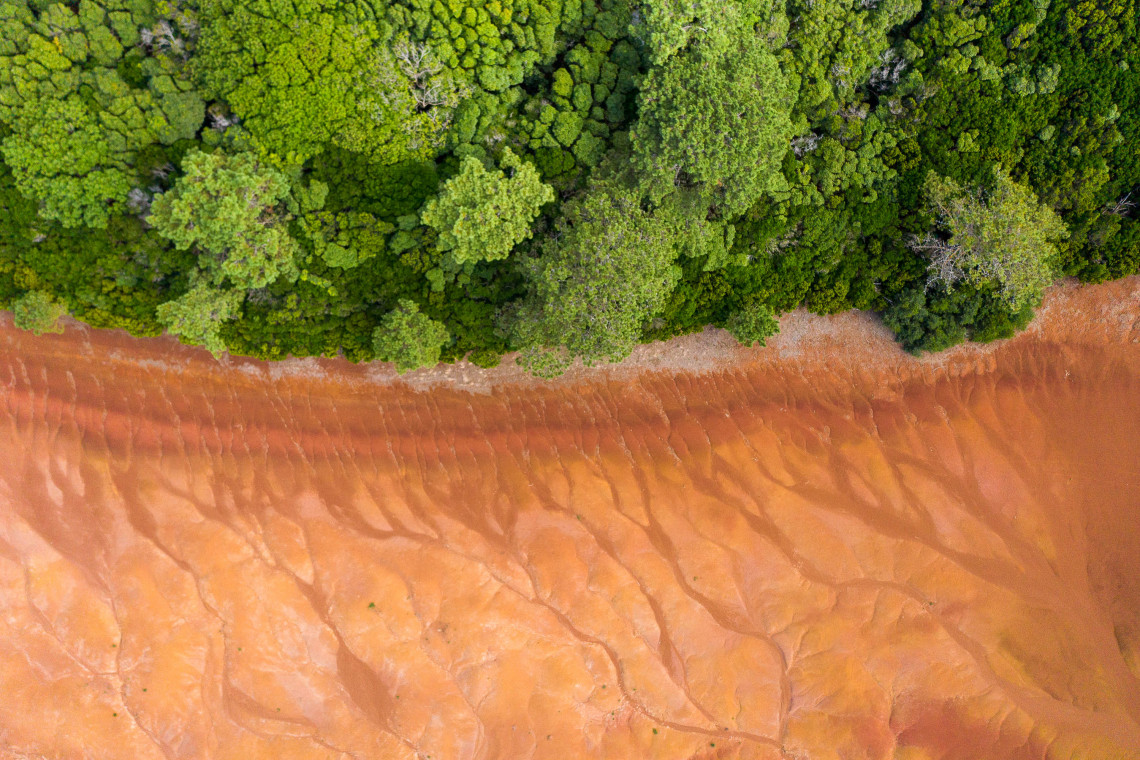
13. Barreiro da Faneca. The "red desert of the Azores", 8.35 km² of bare rust-coloured clay on the plateau above the north coast, formed by millions of years of weathering of Pliocene basalts in a hot, humid climate, and classified as a protected landscape in 2008. There is nothing like it anywhere else in Portugal. Stay on the marked paths: footprints damage the clay crust for years. The Costa Norte trail crosses it, and the road from Anjos to Santa Bárbara gives easy access.
The North-East: Santa Bárbara and São Lourenço
14. Poço da Pedreira. An old quarry below Santa Bárbara whose pale sandstone, cut in vertical columns, supplied the stone for the island's traditional houses; now a priority geosite of the Azores Geopark with a small lake at the bottom, reached by a short walk from the Santa Bárbara road. Nearby, the Ribeira de Maloás is a 20 m waterfall over a wall of basalt columns, another geosite and one of the island's most photographed natural features.
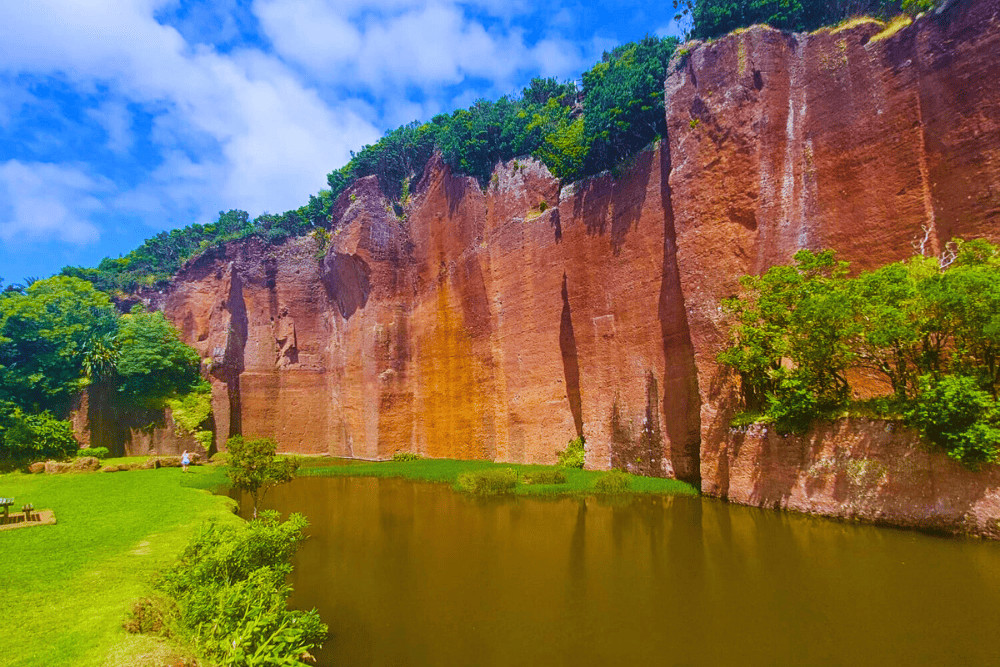
Poço da Pedreira: a striking red rock formation on Santa Maria Island, Azores
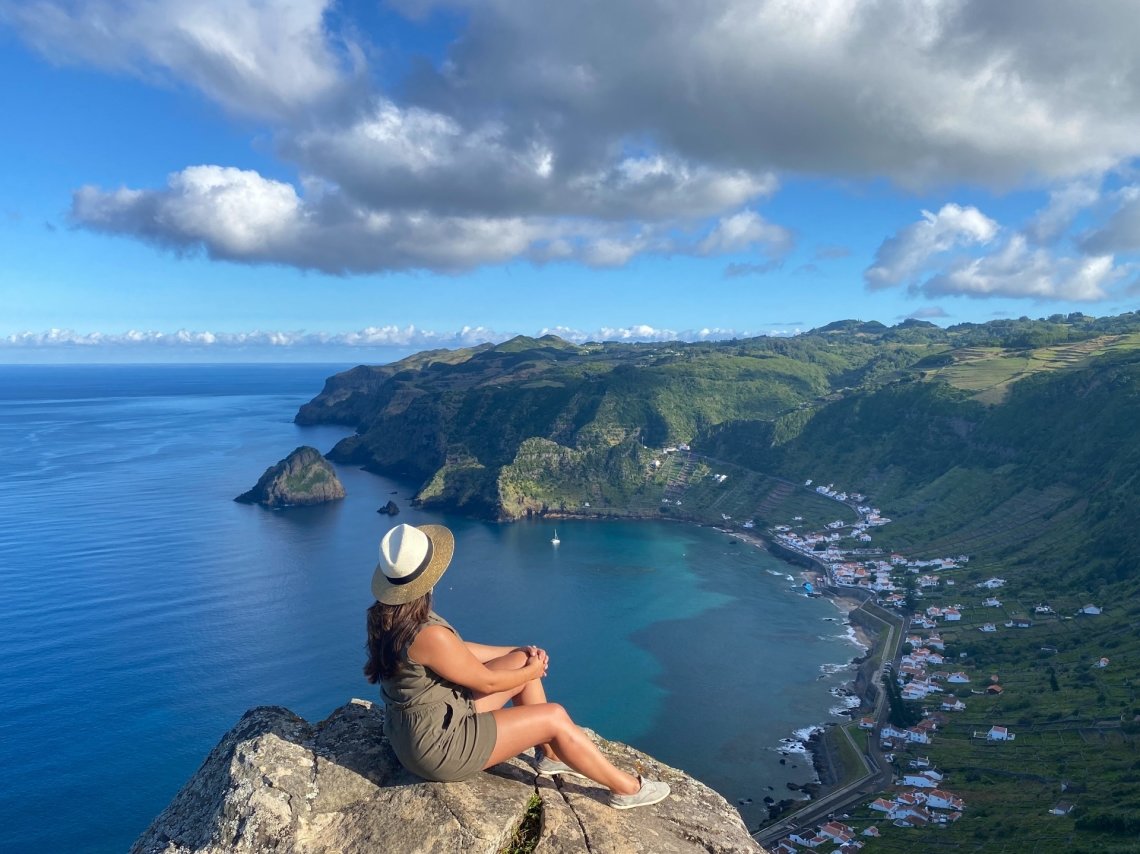
15. Baía de São Lourenço. The image of Santa Maria: a bay shaped like an amphitheatre, its slopes stepped with vineyard terraces walled in dark stone, dropping to a small pale beach, natural pools and the Ilhéu do Romeiro offshore. A nature reserve since 1987, with fewer than 20 residents, a couple of summer restaurants, showers and two viewpoints on the road down. Come late in the day when the light is on the terraces. The Areia Branca trail ends here after crossing the island from Praia Formosa.
Our Santa Maria guides
How Long to Stay and How to See It
Two full days cover the fifteen places above at a relaxed pace, three let you add a boat trip, a dive or a long hike, and a week suits divers in the mobula season or anyone who wants a slow beach holiday. The island works well as a two- or three-night add-on to São Miguel, and it is possible, if rushed, as a day trip on the first and last flights with the full-day island tour in between.
The usual plan is a rental car, because there is no useful public transport and the sights are spread around the coast. The alternative is the full-day van tour with a local guide, which covers Vila do Porto, the Barreiro da Faneca, Anjos, São Lourenço, Pico Alto and Praia Formosa with time to swim and lunch, and is the right first day for anyone who wants the stories as well as the views. Two- and three-day packages bundle the tour with a guided hike or a boat trip and transfers.
SANTA MARIA FULL-DAY ISLAND TOUR
Eight hours around the island with a local guide: Vila do Porto, the red desert, Anjos, São Lourenço, Pico Alto and Praia Formosa, with swim stops. Pick-up at your hotel or the airport.
Book the island tour →How to Get to Santa Maria
Santa Maria has its own airport, five minutes from Vila do Porto, with SATA Air Açores flights from Ponta Delgada on São Miguel several times a day (25 minutes) and Azores Airlines flights from Lisbon a few times a week; connections from the other islands go via São Miguel. There is no regular ferry: Atlânticoline occasionally schedules summer crossings from São Miguel, so check their timetable, but plan on flying. Rent the car for collection at the airport, and book it early for July and August, when the small island fleet sells out.
Where to Stay and When to Go
Stay in Vila do Porto for restaurants, the airport and the boats, at Praia Formosa for the beach, or in a rural house in Almagreira or Santo Espírito for quiet; our Santa Maria hotels guide compares the areas and the properties. The best months are May to October, when the sea climbs from 18 to 23°C and the island lives up to its name; spring brings green fields and the Holy Spirit festivals, late summer the warmest water and the Maré de Agosto festival, and winter the lowest prices, big waves at Anjos and a waterfall at full flow at Aveiro.
SANTA MARIA ACCOMMODATION
Live availability for every hotel, beach house and rural quinta we sell on the island, for your dates.
Search Santa Maria hotels →Plan it your way
Custom Your Trip
Tell our local travel advisors which islands, dates and experiences you want and we build the itinerary around you.
Start your custom trip →Limited time
Azores Packages On Sale
Flights, hotels and rental car bundled at reduced prices. See every package currently on sale and book while it lasts.
Book now →Santa Maria Island: FAQ
Is Santa Maria, Azores worth visiting?
Yes, for the beaches, the geology and the quiet. It is the sunniest Azorean island, has the archipelago's only pale-sand beaches and some of its best diving, and it sees a fraction of São Miguel's visitors. It suits two or three days as an add-on to São Miguel or a week for divers and beach lovers.
What is Santa Maria Island known for?
Being the oldest and sunniest island in the Azores, the first to be settled (1432), Christopher Columbus's stop in 1493, the pale sand of Praia Formosa, the terraced bay of São Lourenço, the red clay desert of the Barreiro da Faneca, marine fossils, and mobula rays at the Ambrósio seamount.
How many days do you need in Santa Maria?
Two full days for the main sights, three to add a boat trip, a dive or a long hike. A day trip from São Miguel on the first and last flights is possible with the full-day tour but rushed.
How do you get to Santa Maria Island?
By air: SATA flights from Ponta Delgada take 25 minutes and run several times a day, and Azores Airlines flies from Lisbon a few times a week. There is no regular ferry. The airport is five minutes from Vila do Porto.
Do you need a car in Santa Maria?
Yes, or the full-day guided tour. There is no useful public transport and the sights are spread around the coast, 10 to 25 minutes apart. Book the car early for summer.
What is the best thing to see in Santa Maria?
The bay of São Lourenço in the late afternoon. After that, Praia Formosa, the Barreiro da Faneca red desert, the Anjos chapel and pools, and the view from Pico Alto.
Does Santa Maria have white sand beaches?
It has the only pale-sand beaches in the Azores, Praia Formosa and the small beach at São Lourenço. The sand is light gold from limestone and shell fragments rather than true white, and unlike the black sand elsewhere.
When is the best time to visit Santa Maria?
May to October. June and September combine warm weather, a swimmable sea and few visitors; July and August are the warmest and busiest, with the Maré de Agosto festival in the second half of August. Winter is quiet, cheap and wetter, though still the driest in the Azores.
What is Santa Maria's population?
About 5,400 people in the 2021 census, nearly all in the municipality of Vila do Porto and its five parishes: Vila do Porto, São Pedro, Almagreira, Santo Espírito and Santa Bárbara.
Is Santa Maria the oldest Azores island?
Yes. Its oldest rocks are more than 8 million years old and it has had no volcanic activity for millions of years, which is why it is the only island with sedimentary rock, marine fossils and gentler, eroded landscapes.