October 2026 • 8 min read
Santa Maria is 97 km² of the oldest, driest, sunniest land in the Azores, 25 minutes by air from Ponta Delgada. Three days is the right amount of time. Day one is the south: Vila do Porto, the white sand of Praia Formosa, the basalt columns of Ribeira de Maloás, the terraced village of Maia and the 110 metre Aveiro waterfall. Day two is the east and the summit: Santo Espírito, the bay of São Lourenço, the Poço da Pedreira quarry and Pico Alto. Day three is the west: the red desert of Barreiro da Faneca and the Anjos pools where Columbus landed in 1493, with a dive or snorkel at the Ambrósio seamount if the season is right.
You need a rental car; the island crosses in 30 minutes and almost everything is within 20 minutes of Vila do Porto. This guide gives the order, the timings and the tours that can be booked; our separate Santa Maria pages cover hotels, trails, food and the full list of sights.
Before You Go: Getting There and Getting Around
Santa Maria has its own airport, a legacy of the 1940s when it was the refuelling stop for transatlantic flights, and SATA Air Açores flies from Ponta Delgada two or three times a day in about 25 minutes. There are also a few direct flights from Lisbon each week. There is no regular passenger ferry, so for a multi-island trip you fly in and out via São Miguel. The island is 100 km south of São Miguel and a world apart in character: lower, older (8 million years), browner in summer, and with about 2,000 hours of sunshine a year against roughly 1,700 in Ponta Delgada.
Rent a car at the airport. Vila do Porto, the only town and the oldest settlement in the Azores (1432), is five minutes away and the natural base, with most of the restaurants and guesthouses. Alternatives are the beach at Praia Formosa in summer or a rural house near São Lourenço or Maia for views. The population is about 5,400, so book dinner in high season and expect places to close early outside it.
Best months: June to September for swimming (the sea reaches 22°C to 24°C) and for the Ambrósio dive season; May and October for walking and empty roads. In late August the Maré de Agosto world music festival fills Praia Formosa for three nights, which is either the reason to come or the week to avoid.
Day 1: Vila do Porto, Praia Formosa and the South Coast
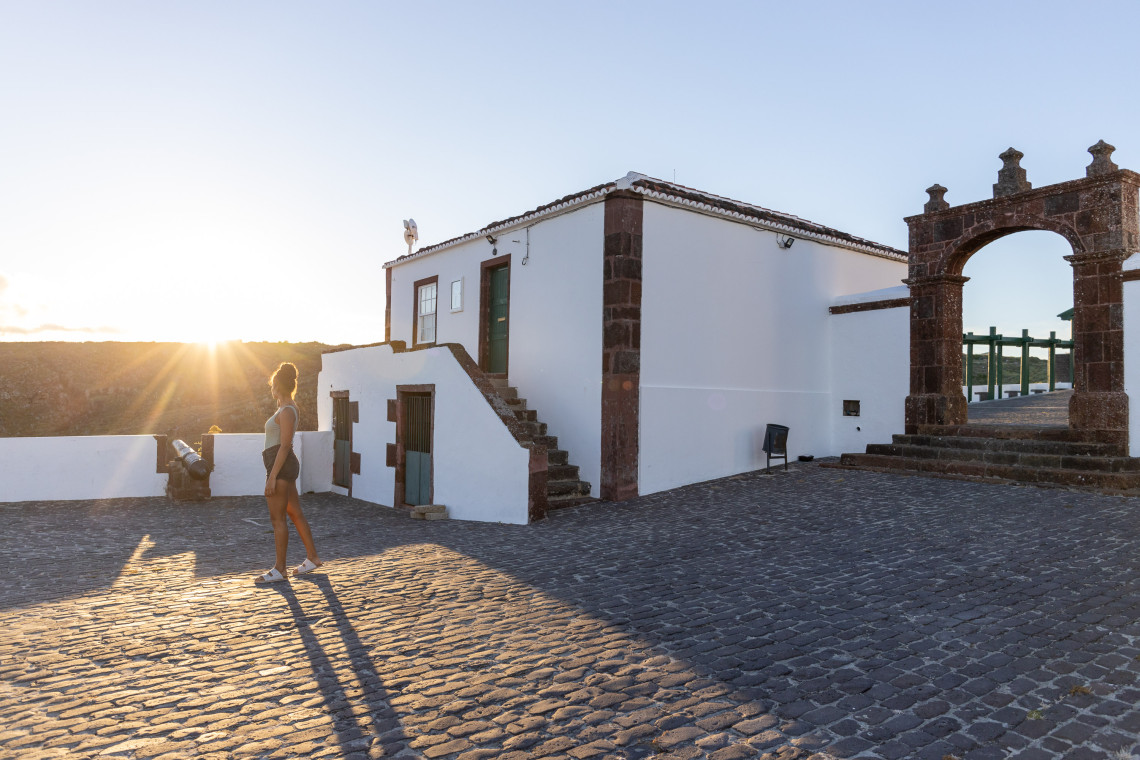
Morning: Vila do Porto. Start on foot in the town where the Azores began. The Forte de São Brás (16th century) guards the harbour, the parish church of Nossa Senhora da Assunção dates from the first settlement, and the main street runs down a ridge between two valleys to the port. Allow an hour and a half, including coffee. Just outside town, the Dalberto Pombo Environmental Interpretation Centre, the House of Fossils, explains why Santa Maria is the only island in the Azores with marine fossils and is worth 45 minutes before you see the sites themselves.
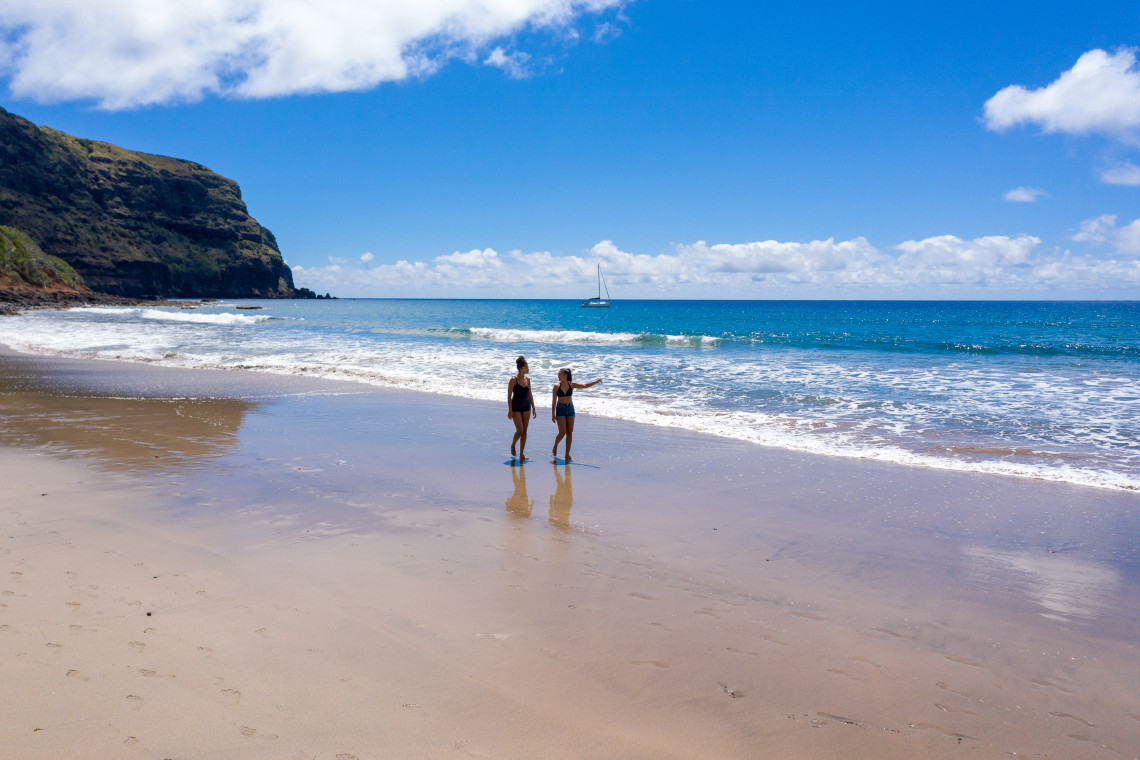
Late morning: Praia Formosa. Fifteen minutes east, the island's beach is a crescent of pale sand, rare in the Azores, below a ruined fort and a terraced hillside of vines. Swim, or walk the sand; in summer there is a bar and lifeguards.
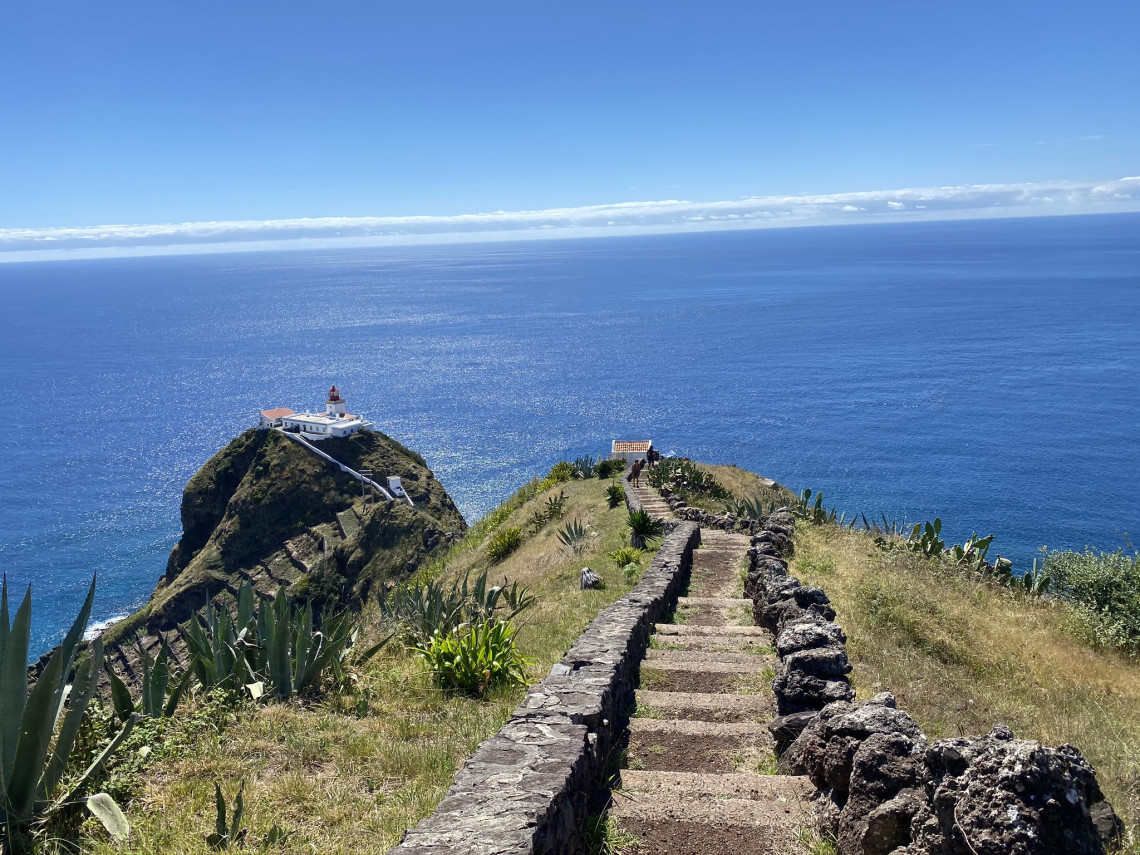
Early afternoon: Ribeira de Maloás and Ponta do Castelo. A short walk from the road near Malbusca leads to the Ribeira de Maloás, a low waterfall over a wall of hexagonal basalt columns, Santa Maria's small Giant's Causeway. Continue to Ponta do Castelo, the south-eastern tip, with the Gonçalo Velho lighthouse and the ruins of the old whaling lookout and ramps above a wild stretch of coast.
Late afternoon: Maia and the Aveiro waterfall. Maia is a hamlet of stone-walled vineyard terraces falling to a lava shore with natural swimming pools and a former whaling station turned café. Behind it, the Cascata do Aveiro drops 110 metres down the cliff, the highest waterfall in Portugal, strongest after rain and sometimes a thread in late summer. Swim in the pools, watch the sun go off the terraces and drive back to Vila do Porto for dinner (20 minutes).
Day 2: Santo Espírito, São Lourenço and Pico Alto
Morning: Santo Espírito. The island's most traditional parish, 15 minutes from town, has the whitewashed church with its ornate volcanic stone façade, a small embroidery and handicraft tradition and, nearby, the chapel of Nossa Senhora de Fátima on a hilltop with views over the whole east of the island.
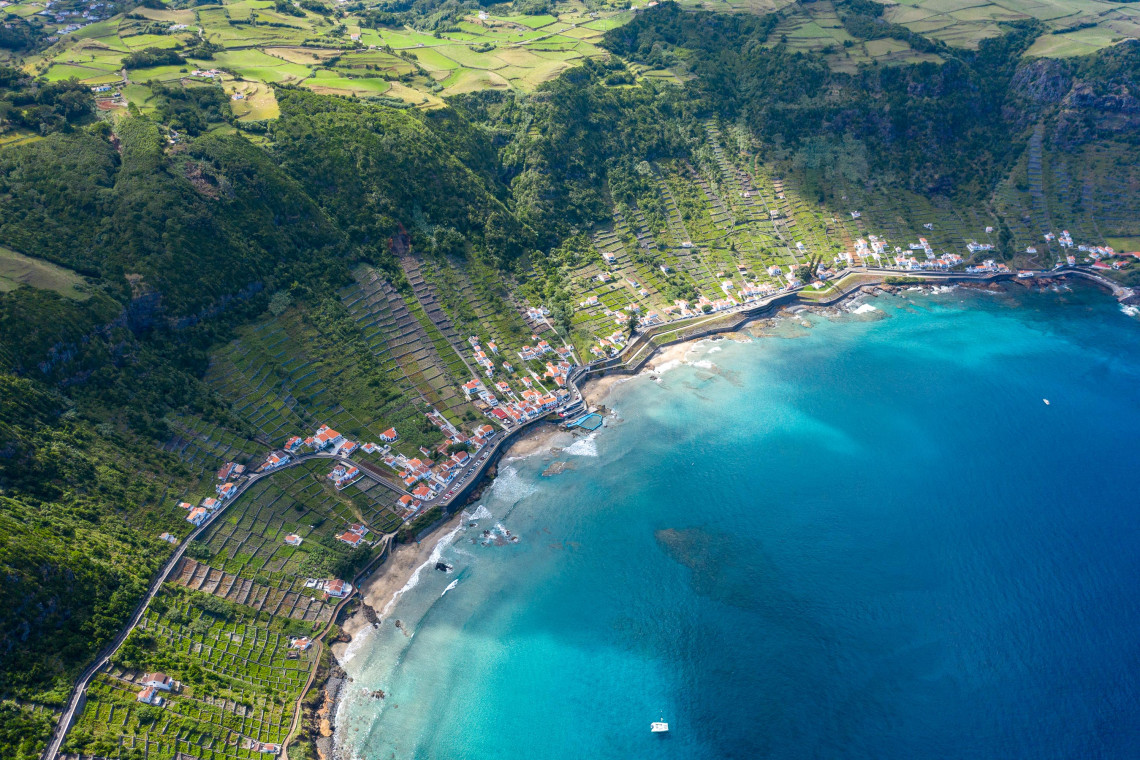
Late morning: Baía de São Lourenço. The signature view of Santa Maria. From the viewpoint above, the bay is an amphitheatre of terraced vineyards walled in black stone, with a village, a harbour, a beach and natural pools at the bottom and an islet offshore. Drive down (the road is steep), swim in the pools or off the small beach, and eat lunch at the bar by the water. Allow two to three hours; it is the kind of place people stay all afternoon.
Afternoon: Poço da Pedreira and Pico Alto. Ten minutes inland, the Poço da Pedreira is a disused quarry where the cut red-brown rock forms vertical geometric walls around a pool. From there a road climbs to Pico Alto, the island's summit at 587 metres, where a short path through the cedar forest leads to a 360-degree view: São Lourenço below, Vila do Porto to the west, and on a clear day São Miguel on the northern horizon.
GUIDED HALF-DAY HIKE WITH LUNCH
Two options with a local guide: Pico Alto and Anjos, or Santo Espírito and Maia. Both include lunch and transfers from your hotel.
Book the Pico Alto and Anjos hike →Day 3: Barreiro da Faneca, Anjos and the Sea
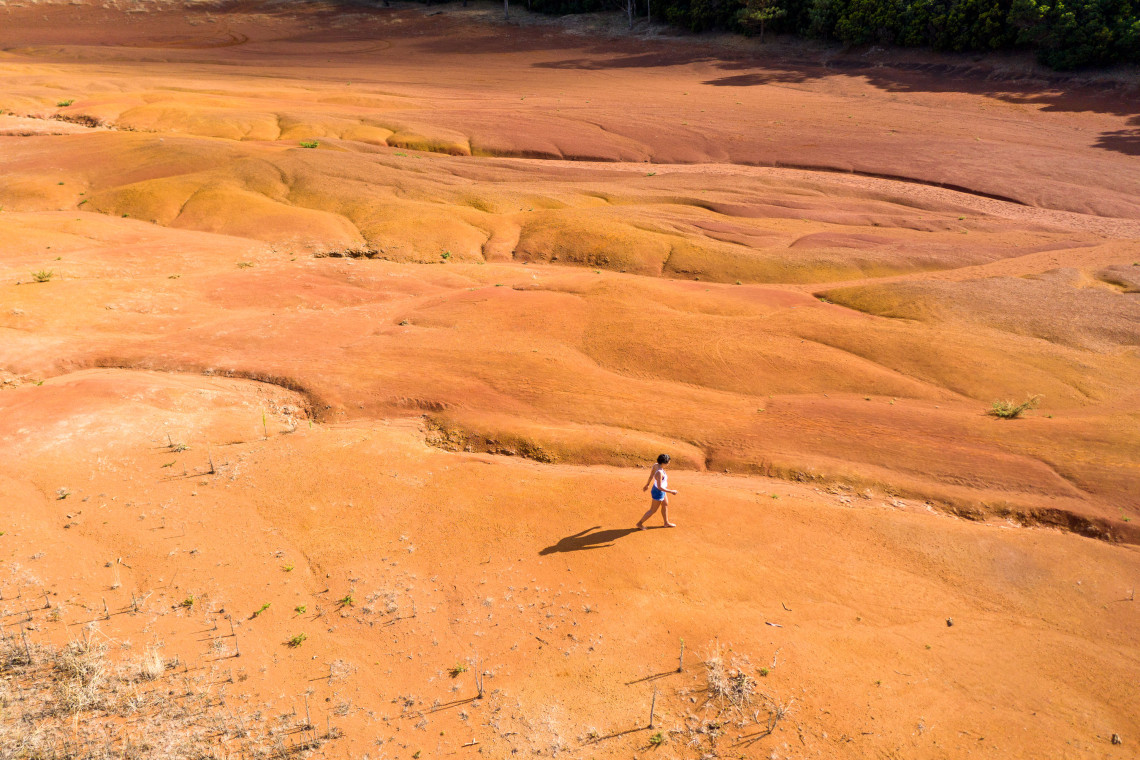
Morning: Barreiro da Faneca. On the north-west plateau, 10 minutes from Vila do Porto, 8 km² of bare red clay roll towards the cliffs: the "red desert" of the Azores, a protected landscape and the strangest sight on the island. Walk the marked trail across it in the early light, when the colour is strongest and before the heat.
Late morning: Anjos. On the north coast below the Barreiro, Anjos is a fishing hamlet with natural pools, a tiny whitewashed chapel said to be the oldest in the Azores and a statue of Christopher Columbus, who anchored here in February 1493 on the way home from his first voyage and had mass said in the chapel. Swim in the pools and have lunch at the bar on the harbour, which is also the sunset spot if you prefer to end the day here.
Afternoon: under the water. Santa Maria has the best diving in the Azores, and the Baixa do Ambrósio seamount, a few miles offshore, is the reason: from roughly May to October, groups of mobula (devil) rays circle divers and snorkellers in open blue water, and whale sharks appear in some summers. Non-divers can join a snorkelling trip; divers should book Ambrósio in advance because boats fill in summer. If the sea is rough or the season is wrong, swap this for the Grande Trilho, a section of the 78 km long-distance footpath that circles the island, or for a whale and dolphin watching trip from Vila do Porto.
AMBRÓSIO: MOBULA RAYS IN THE BLUE
Half-day dive at the Ambrósio seamount with a local centre, or a snorkelling trip to the marine protected areas for non-divers.
Book the Ambrósio dive →If You Only Have One Day
Fly in on the first flight and out on the last and you can see the island from a van: a full-day guided tour covers Vila do Porto, Barreiro da Faneca, Anjos, São Lourenço, Pico Alto and Praia Formosa with lunch, which is the efficient way to do Santa Maria as a day trip from São Miguel. You will miss the swimming and the pace, which are the point of the island, but you will understand why it looks nothing like the rest of the Azores.
SANTA MARIA IN A DAY
Full-day van tour of the island with a local guide and lunch included, from Vila do Porto or the airport.
Book the full-day tour →Where to Eat and Sleep
Vila do Porto has the island's restaurants: fresh fish, grilled limpets, local beef, the sweet "sopas do Espírito Santo" at festival time and the island's own aromatic wine from the terraces of Maia and São Lourenço. The bars at Anjos and São Lourenço do simple lunches by the water. For a stay of three nights, a guesthouse or small hotel in Vila do Porto keeps dinner within walking distance; a rural house above São Lourenço or on the Maia terraces gives the view but means driving in the dark. Our Santa Maria hotels page lists the options by area.
Plan it your way
Custom Your Trip
Tell our local travel advisors which islands, dates and experiences you want and we build the itinerary around you.
Start your custom trip →Limited time
Azores Packages On Sale
Flights, hotels and rental car bundled at reduced prices. See every package currently on sale and book while it lasts.
Book now →Santa Maria Itinerary: FAQ
How many days do you need in Santa Maria?
Three days covers the island at a relaxed pace with time to swim. Two days works if you skip the diving; one day is possible as a guided day trip from São Miguel.
How do you get to Santa Maria from São Miguel?
SATA Air Açores flies from Ponta Delgada two or three times a day, taking about 25 minutes. There is no regular ferry.
Do you need a car in Santa Maria?
Yes, unless you book guided tours. The island crosses in 30 minutes and most sights are within 20 minutes of Vila do Porto, but there is no useful public transport to the beaches and viewpoints.
What is Santa Maria known for?
Being the oldest, sunniest and driest island in the Azores, with the archipelago's pale sand beach at Praia Formosa, the terraced bay of São Lourenço, the red clay desert of Barreiro da Faneca, Portugal's highest waterfall at Aveiro, marine fossils, and mobula ray diving at Ambrósio.
When is the best time to visit Santa Maria?
June to September for beaches and diving, with the Ambrósio mobula season running roughly May to October. May and October are quieter and good for walking. Late August brings the Maré de Agosto music festival.
Can you see Santa Maria in one day?
Yes, with a full-day guided tour from the airport covering Vila do Porto, Barreiro da Faneca, Anjos, São Lourenço, Pico Alto and Praia Formosa. You will miss the swimming.
Is Santa Maria worth visiting?
For a second or third Azores trip, or for anyone who wants sun, a real beach and quiet, yes. First-time visitors with a single week are usually better served by São Miguel, and can add Santa Maria as a two-night extension.
Where did Columbus land in the Azores?
At Anjos, on the north coast of Santa Maria, in February 1493, returning from his first voyage to the Americas. The chapel where mass was said still stands beside the natural pools.